
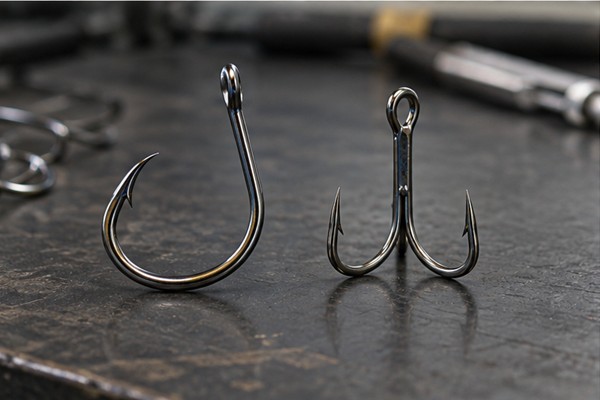
HOOK STYLE COMPARISON
Barbed vs Barbless Fishing Hooks: A Wholesale Range Planning Guide
For a trade buyer, barbed vs barbless fishing hooks: a wholesale range planning guide is not a catalogue-only question. The useful answer is how to define a balanced hook assortment plan that explains barb configuration, removal expectations, use cases and clear product labeling without making universal conservation or catch claims before sampling, production and export preparation begin. This guide is written for importers, distributors, retailers and private-label teams that need a clear buying decision, a usable technical brief and an inspection path that more than one person can follow.
1. Start with the market and application
A buyer should start with the commercial job of the product, not a vague request for “premium quality.” In tackle retailers, conservation-oriented programs, freshwater brands and private-label hook ranges, the end user, conditions, sales channel and target retail price can each change the correct version. State who will use the product, how often, where it will be sold and why the SKU deserves a place in the range. That prevents a generic specification from being used for two applications with very different customer expectations.
Treat the first order as a small product system. Define the target market, intended use, customer skill level, target price, launch timing and expected reorder path. A factory can then give practical input on hook pattern, barb configuration, wire diameter, point geometry, size convention, pack count, target use and local-rule wording without guessing what “best” means. For a new range, fewer well-defined SKUs normally teach the buyer more than a large list of near-duplicates.
Write a one-page range map that gives every model a clear job: entry, core, premium, specialist or seasonal. This makes retail training, pricing and replenishment easier, and it prevents sample work from drifting away from the market brief.
- Target customer, sales channel and destination market
- Fishing application and expected use conditions
- Target retail position and reason each SKU exists
- Initial quantity, launch timing and reorder assumption
2. Turn the buying brief into a controlled specification
A quotation is comparable only when each supplier is answering the same requirement. For this category, the brief should cover hook pattern, barb configuration, wire diameter, point geometry, size convention, pack count, target use and local-rule wording. Include any benchmark item, identify what must be retained, record what needs to change and make visible claims separate from development targets. A product photo may be useful for discussion, but it is not a sufficient technical reference.
If a dimension, capacity, strength, casting range or corrosion statement matters to the customer, record the unit, measurement basis and acceptable tolerance. Where no agreed test method exists, use factual wording rather than a marketing superlative. This makes the product easier to approve and reduces the chance that retail copy promises more than production can consistently deliver.
Use controlled version names for the brief, artwork and reference sample. TackVo’s OEM/ODM workflow treats these records as part of development, because product, packaging and inspection teams need the same source of truth.
- Product model and intended application
- Technical requirements and tolerances
- Finish, component, color and branding direction
- Retail pack, barcode, carton and destination requirements

Review the product configuration and compatibility details before approving a sample.
3. Use sample review to remove practical uncertainty
Sample review is the point where a written requirement becomes a product decision. Check the sample in the expected application rather than only under office lighting. Review function, visible finish, component fit, retail presentation and any interaction with associated items. If the range will be sold as a coordinated system, the sample stage is the right time to check that the product story remains coherent.
Keep a dated approval file with photos, key measurements, component notes, artwork version, packaging notes and agreed revisions. Retain an identified production reference sample whenever possible. It does not replace the written brief, but it gives factory testing and shipment inspection teams a physical point of comparison when a question arises.
Installation preparation for a retail display, distributor warehouse or e-commerce fulfillment process should also begin here. Check shelf-facing information, barcode position, accessories, pack fit and the practical difference between nearby SKUs. A problem solved on a sample is less expensive than the same problem discovered after mass production.
- Review function in the intended application
- Compare visible details with the controlled brief
- Approve artwork, label data and pack fit before production
- Keep a dated sample and revision record
Send your target market, application, hook pattern, barb configuration, wire diameter, point geometry, size convention, pack count, target use and local-rule wording and expected quantity. TackVo can help organize the next sampling discussion.
Send your requirements4. Match factory testing to the product application
Factory testing is useful when it answers a real application question. For this product family, agree how the factory will review point condition, barb form, wire finish, pack count and clear identification of barbed versus barbless variants. The purpose is not impressive paperwork; it is a repeatable way to find a deviation before goods are packed. Separate incoming-component checks, in-process checks and final checks so responsibility is clear.
When a performance figure is important, record the sample condition and test basis alongside the result. A number without context can mislead a buyer. A line result, rod evaluation or reel function review needs enough method detail that the buyer can understand what was actually checked. The right amount of documentation depends on the project, but the method should be understandable to both the factory and the purchasing team.
Avoid unsupported absolutes and zero-defect language. A credible plan identifies critical-to-function and critical-to-appearance points, uses an approved reference, records exceptions and resolves relevant issues before final dispatch. See TackVo’s quality workflow for the order-level controls around product-specific testing.
- Agree critical-to-function and appearance checks
- Use approved samples and controlled documents
- Keep relevant records for exceptions
- Confirm final checks before packing release
5. Prepare pre-shipment inspection before the goods are ready
A pre-shipment inspection should confirm that finished goods match the approved SKU list, reference sample, technical requirement and packing instructions. Decide before production ends how quantity will be checked, which functional samples will be selected, what visible points need review and how exceptions will be recorded. This matters especially for mixed orders, where one incorrect variant can be hidden inside an otherwise correct shipment.
For barbed vs barbless fishing hooks: a wholesale range planning guide, the inspection checklist should include point condition, barb form, wire finish, pack count and clear identification of barbed versus barbless variants. It should also review item code, barcode or label version, retail-pack quantity, inner-box quantity, carton marks and visible shipping condition. Photo records work best when they include both an overall production view and a close image of the SKU, component or mark being verified.
The final result should be clear: accepted, accepted with an agreed correction, or held for resolution. Independent inspectors should receive the same approved brief and sample reference rather than a broad product description. That gives every party a fair, consistent basis for the decision.
- Verify SKU mix, quantity and visible condition
- Check selected samples for function and configuration
- Review labels, cartons and shipping marks
- Document exceptions against the approved reference
6. Confirm packaging and export handover
Packaging must present the product to the customer and protect it through handling, storage and transport. Confirm use secure point protection, separate configurations by SKU and ensure front-of-pack images match the actual hook style. Review the retail pack and master carton together: a consumer pack can look correct but still create receiving or damage problems if carton count, marks or protective materials do not match the order data.
Before handover, compare the packing list to the carton-to-SKU relationship. The importer’s receiving team should be able to identify what is in each carton without opening every box. For e-commerce, confirm that the pack can tolerate downstream handling; for distribution, agree pallet details, destination marks and freight-forwarder instructions early enough that they do not become a last-minute change.
If a quantity, label or carton configuration changes after approval, revise the order record and make the change visible to everyone who will inspect or receive the shipment. Packaging approval is a useful trust checkpoint because it proves that product, artwork, purchasing and logistics teams are working from the same information.
- Approve retail pack and export carton as one system
- Confirm product protection and pack-out quantities
- Check destination marks and receiving information
- Match packing-list data to the physical carton plan
7. Keep the commercial plan as clear as the product plan
Price, MOQ and lead time are meaningful only when tied to a defined product and packaging scope. Ask for a quotation that makes the selected model, customization, pack format, quantity, delivery assumption and commercial terms clear. Product MOQ, custom-component MOQ and printed-packaging MOQ may be different; treating them as one number creates avoidable surprises.
Use a practical SKU matrix for a first order. It should list quantity by model, color or size; artwork version; inner and master-carton count; sample status; and unresolved decisions. This one file is useful during quotation, factory testing, shipment inspection and reorder planning. It also helps buyers turn real sales feedback into a more accurate second order.
The correct commercial decision is not automatically the lowest unit price. Consider whether a cheaper option changes product performance, packing protection, delivery risk or the buyer’s ability to sell and replenish the item. An order is commercially sound when the product promise remains clear from sample to final carton.
- Separate product, customization and packaging MOQ
- Maintain one controlled SKU and carton matrix
- Confirm lead time from an approved scope
- Review reorder evidence after the launch
8. Use reliable references and keep the brief current
Good buyer content should clarify decisions rather than create false certainty. For public terminology and application context, see Take Me Fishing barbless hook guidance. External resources support the buying conversation, but they do not replace an approved sample, a project-specific test method or a written order specification.
Review the live brief whenever the destination market, product use, packaging or order quantity changes. A product choice that is sensible for one freshwater retailer may not suit a saltwater distributor range, and a pack that works on a store shelf may not survive a long export journey. Keeping the requirement current protects the buyer and the production team.
TackVo coordinates development, assembly, inspection and export preparation from Shenzhen. Send the application, reference products, quantity range, destination market and target retail position to begin a focused discussion without inventing specifications before they have been validated.
9. Keep product claims useful and verifiable
A product claim should help a customer choose the right item, not create a promise that the buyer and factory cannot later verify. For barbed vs barbless fishing hooks: a wholesale range planning guide, connect the claim to the planned application, configuration and approved sample. Avoid broad terms such as “ultimate” or “unbreakable” when a practical description of the material, format, capacity or use condition gives the buyer clearer information.
Review the wording on the sample, artwork and retail pack together. A technical value can be correct but still confuse customers if the unit, range or application is unclear. Where national labeling, language or packaging rules apply, the buyer should provide the relevant requirement early enough for artwork review. The same disciplined language should appear in product pages, sales sheets and carton records so downstream teams do not repeat different claims.
This is also an E-E-A-T issue. Buyers, end users and search systems trust specific, qualified statements more than generic performance language. A clear explanation of what was specified, how it is used and what was inspected is more credible than an unsubstantiated superlative.
10. Plan the receiving and reorder process before dispatch
A shipment is not complete when it leaves the factory. The receiving team needs a packing list, carton identification and SKU logic that lets it check the order efficiently. Before dispatch, agree who will receive the goods, what evidence is needed at arrival and how any shortage, transit damage or label mismatch should be reported. This avoids wasting the first days after delivery reconstructing information that could have been placed in the order file.
For repeat business, turn arrival feedback into the next product brief. Record sell-through observations, customer questions, return reasons, packaging damage and the variations that consistently move. This is more useful than launching a larger second order by instinct. The strongest B2B ranges improve through a controlled loop: market feedback, revised specification, approved sample, production review and shipment inspection.
11. A practical buyer decision framework
Before approving an order, ask four simple questions. First, does the selected SKU solve a real customer application? Second, can its specification and retail description be stated clearly? Third, is there an approved sample and realistic factory-testing plan? Fourth, can the product arrive in an identifiable, protected carton that the receiving team can process? If one answer is unclear, the project needs another decision rather than a faster purchase order.
This framework is intentionally practical. It works for a trial quantity as well as a larger private-label launch because it keeps commercial, technical and logistics decisions connected. Buyers who use it can compare supplier responses more fairly, reduce late revisions and create a useful record for their next reorder or range expansion.
12. Create a handoff record the whole team can use
The final order record should be usable by purchasing, product development, quality control, logistics and the receiving team. It does not need to be complicated. At minimum, retain the approved product brief, sample photos, artwork version, SKU matrix, packing instruction, inspection result and shipment documents together. When these materials are separated across individual inboxes, small questions become slow and expensive to resolve.
A shared handoff record also protects the buyer when staff or suppliers change. It explains why a component, pack format or marking was selected and shows the evidence used to approve it. For repeat orders, this record becomes the baseline for comparison. For new orders, it makes the quotation process faster because the buyer can state what should be kept, improved or discontinued.
At TackVo, factory testing and shipment inspection are treated as part of this same record. The goal is not extra administration; it is to make the product decision traceable from the buyer’s market brief through to the export carton. This approach is particularly valuable for multi-SKU programs, where a correct product with the wrong label, insert or carton count is still a commercial problem.
Before release, give the record a final buyer-side review. Check the product application, agreed specification, visible claims, quantity, packing plan, destination marks and contact details. A ten-minute confirmation before shipment can prevent weeks of corrective work after arrival.
13. Review risk before you authorize production
A final risk review is a practical pause between sample approval and production release. Ask which part of the order would be hardest to correct after shipment: a technical feature, a visible label, a retail-pack fit, a carton configuration or a delivery deadline. Then make sure that issue has an owner, an approved reference and a clear verification point. This keeps attention on the decisions that have the greatest commercial impact.
Risk review is not a reason to delay every project. It is a way to distinguish an open question from a managed one. Where an option remains uncertain, document the decision, explain the acceptable outcome and add a check at sample, in-process or pre-shipment stage. This gives the buyer a controlled path forward rather than an assumption hidden inside an email thread.
For a first order, buyers should also decide what evidence they need for the receiving process: final photos, inspection records, carton counts, packing list details or pallet images. Setting this expectation in advance makes handover calmer and gives both parties a practical basis for the next order.
Conclusion
Share your target market, a balanced hook assortment plan that explains barb configuration, removal expectations, use cases and clear product labeling without making universal conservation or catch claims and expected quantity. TackVo will help prepare a practical development, inspection and shipment path.
Frequently asked questions
What should a buyer define before sourcing barbed vs barbless fishing hooks: a wholesale range planning guide?
Define the target application, sales channel, price position, technical requirements, packaging, quantity range and destination market. Use an approved reference sample and controlled brief so quotation, production and shipment inspection use the same decision.
When should packaging be approved?
Approve retail packaging, label data and carton marks before mass production. Packaging affects product fit, print commitments, barcode accuracy, pack-out and export handling, so it should not be a final afterthought.
Can TackVo support private-label development?
Yes. Share the product application, relevant specifications, target quantity and brand direction. We can assess sampling, packaging, factory testing and shipment inspection for the project.
Turn the brief into a controlled order
Share your target market, a balanced hook assortment plan that explains barb configuration, removal expectations, use cases and clear product labeling without making universal conservation or catch claims and expected quantity. TackVo will help prepare a practical development, inspection and shipment path.
Request a quote